
Friday 10th April 2026 The Rise and Fall of the Giant Planet Occurrence Rate
Dr Heather Fenwick Johnston, University of Exeter
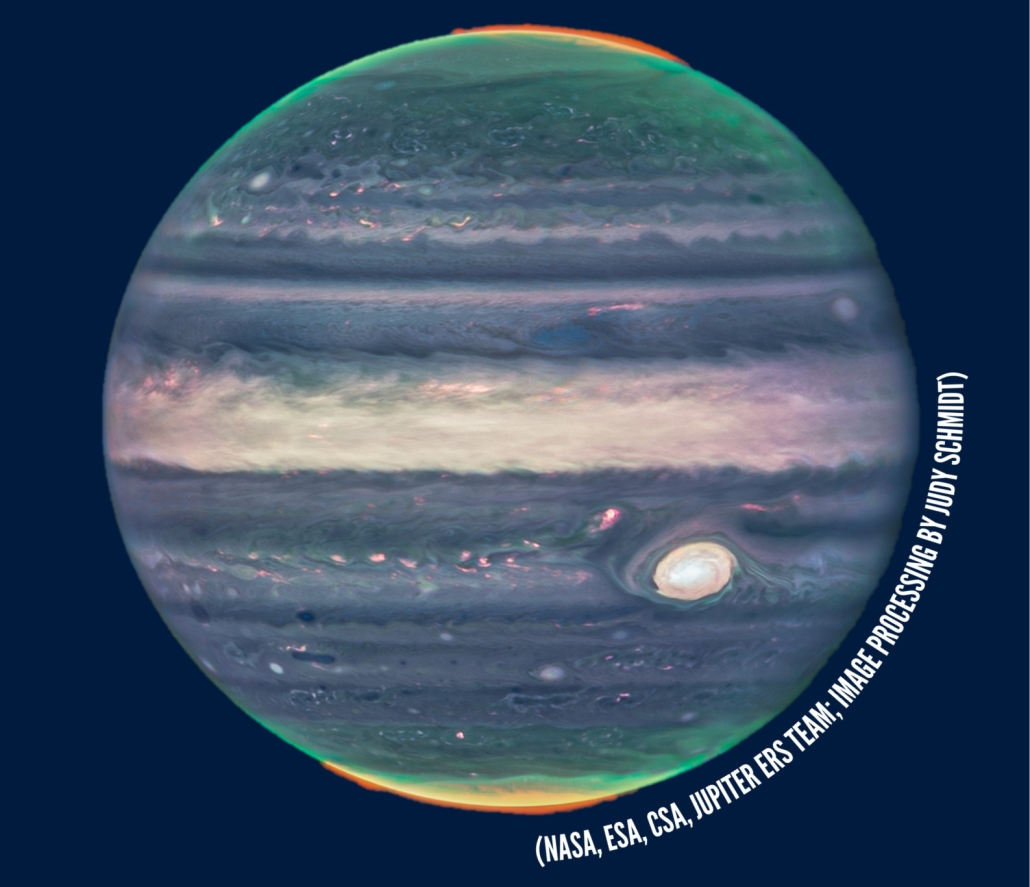
The image is © NASA, ESA, CSA, Jupiter ERS Team; image processing by Judy Schmidt
Giant planets like Jupiter play a key role in shaping the architecture of planetary systems. However, they make up only a tiny fraction of the 5,000+ exoplanets known today. Giant planets are found most frequently around stars 1.7 times as massive as the Sun, and the occurrence rate drops to zero around stars 2.5 times as massive as our Sun. My talk will explore how giant planets form, why they are special, and the rise and fall of the giant planet occurrence rate.
Dr Heather Fenwick Johnston, University of Exeter

Heather Fenwick Johnston is a postdoctoral researcher at the University of Exeter where she works on all things to do with planet formation and evolution. Everything from asteroid belts and meteorites to building giant planets like Jupiter.
She completed her undergrad in Physics at the University of Dundee in 2020 and her first research project was studying spots in young stars. She then moved to the University of Leeds to do her PhD in planet formation around different kinds of stars and got her doctorate in 2024 before moving to the south west where she works now.
Tickets (£6 or £3 for BRLSI or Herschel Society members and students, proceeds to the BRLSI) available here.
Herschel Society Members receive a discount code in the announcement that is mailed to them.

