Thursday 8th January 2026 The Grand Tour of Ice Giant Aurorae

JWST’s transformational observations of Uranus and Neptune

Professor Tom Stallard, Northumbria University (speaking remotely from Northumberland)


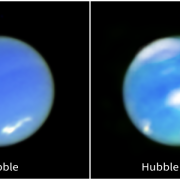
The image is the first Neptune auroral observation since Voyager, and the starting point for our observations. At the left, an enhanced-color image of Neptune from NASA’s Hubble Space Telescope. At the right, that image is combined with data from NASA’s James Webb Space Telescope.

When the Voyager II spacecraft flew past Uranus and Neptune in 1986 and 1989, respectively, it reveals a strange new type of world, somewhere between the Gas Giants of Jupiter and Saturn, and rocky terrestrial planets like Earth and Mars. These worlds, made from ices for most of their depth, but with deep atmospheres, were unique in their magnetic fields.  Unlike Earth’s ‘bar-magnet’ like magnetic field (and the magnetic fields of Mercury, Jupiter and Saturn), these worlds had strangely complex magnetic fields, with four poles, perhaps even eight, magnetic poles (2 north and 2 south).  Though unlike anything else in our current solar system, these fields seem to be very much like the fields that Earth itself produced during past magnetic field reversals, making them of great interest in understanding both Earth’s past and the many variant planetary magnetic fields around other stars.

But, since Voyager, these planets have been hidden from view. A handful of Hubble Space Telescope observations have weakly sampled the UV aurora of Uranus when they are strongest, but we have never observed the aurora of Neptune in the past 35 years.  JWST has changed all that – this incredible telescope can not only show these aurora at the edge of our solar system, we instead see brilliant views of both the aurora and the entire surrounding upper atmosphere, laying out not only aurorae but also the magnetic fields across the planet. So far we have observed Uranus twice and Neptune once.

In November 2025 and January 2026, we are undertaking a Grand Tour of Neptune then Uranus. Watching these planets for an entire month, we will see how the aurora of these worlds change across a solar day, as the Solar Wind, filled with regions of compressed and rarefied wind, reaches and distorts the magnetic fields of these worlds.  In doing so, we’ll massively improve our understanding of the aurora of Uranus, and for Neptune, we will literally increase the total number of auroral images ten-fold. It is the largest JWST planetary observation ever made: we will be revealing the latest images and talk about what we think we’ve discovered so far.

Professor Tom Stallard, Northumbria University

Tom Stallard is a Professor of Astrophysics at Northumbria University, UK. He is a leading planetary astronomer in the UK, who currently has the largest number of JWST hours of any planetary astronomer in the world. In 2019, he was awarded the
Royal Astronomical Society (RAS) Chapman medal for his research into planetary aurora. He has shared his astronomy with the wider public in a range of ways, including RAS  ‘live from the observatory’ events. He was presented with the title ‘Hoku Kolea’ by the Mauna Kea observatories for his work in public engagement.

A video recording of the this talk will be available here.

Tuesday 10th March 2026 Sighting the Sun – and Moon? – at Stonehenge

Professor Clive Ruggles, University of Leicester

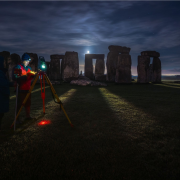
The image is © English Heritage/André Pattenden,

The connection between Stonehenge and summer solstice sunrise is well known, but decades of over-speculation, by both astronomers and archaeologists, concerning the use of the monument for observations of the sky have led many to steer well clear of the subject. In the first part of this talk I will describe what we can sensibly say about the relationship of Stonehenge to the sun, how this relates to more conventional archaeological evidence that has been uncovered in recent years, and what it might have meant to the people who built and used Stonehenge.

But what about the moon? We have just passed a major lunar standstill, an event occurring every 18.6 years around which time the moon can be seen at fortnightly intervals exceptionally far to the north and south. Was this — as some have suggested — known to our prehistoric forebears and was it marked and celebrated, along with the sun and the seasons, at Stonehenge and elsewhere?

I will describe some of the challenges in exploring these questions and what we can conclude with reasonable confidence about the cultural significance of the sun and moon to those who built and used Stonehenge.

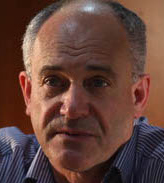
Professor Clive Ruggles, University of Leicester

As Emeritus Professor of Archaeoastronomy at the University of Leicester, Clive has spent a lifetime investigating ancient people’s knowledge of the sky and the uses they make of what they perceive there. A lot of this involves studying the astronomical orientation of prehistoric monuments in Britain, Ireland and Europe — Stonehenge being a prime example. But Clive has also worked extensively on Hawaiian and Pacific star knowledge and in Peru, where in 2005 he co-discovered the 2200-year-old monumental solar observatory at Chankillo, which became a UNESCO World Heritage Site in 2021. In 2017 he was awarded the Royal Astronomical Society’s Agnes Mary Clerke Medal for a “lifetime of distinguished work in the overlapping areas of archaeology, astronomy and the history of science”.

Tickets (£6 or £3 for BRLSI or Herschel Society members and students, proceeds to the BRLSI) available here.

Herschel Society Members receive a discount code in the announcement that is mailed to them.

Friday 10th April 2026 The Rise and Fall of the Giant Planet Occurrence Rate

Dr Heather Fenwick Johnston, University of Exeter

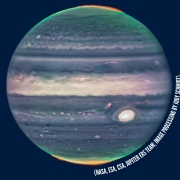
The image is © NASA, ESA, CSA, Jupiter ERS Team; image processing by Judy Schmidt

Giant planets like Jupiter play a key role in shaping the architecture of planetary systems. However, they make up only a tiny fraction of the 5,000+ exoplanets known today. Giant planets are found most frequently around stars 1.7 times as massive as the Sun, and the occurrence rate drops to zero around stars 2.5 times as massive as our Sun. My talk will explore how giant planets form, why they are special, and the rise and fall of the giant planet occurrence rate.

Dr Heather Fenwick Johnston, University of Exeter

Heather Fenwick Johnston is a postdoctoral researcher at the University of Exeter where she works on all things to do with planet formation and evolution.  Everything from asteroid belts and meteorites to building giant planets like Jupiter.  

She completed her undergrad in Physics at the University of Dundee in 2020 and her first research project was studying spots in young stars. She then moved to the University of Leeds to do her PhD in planet formation around different kinds of stars and got her doctorate in 2024 before moving to the south west where she works now.

Tickets (£6 or £3 for BRLSI or Herschel Society members and students, proceeds to the BRLSI) available shortly.

Herschel Society Members receive a discount code in the announcement that is mailed to them.

Friday 1st May 2026 How Stars Are Born

Dr Andrew Wilson, University of Exeter

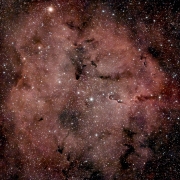
The image is a photo of the young star cluster and nebula IC 1396 © Dr Andrew Wilson

Our modern ideas about star formation date back to Immanuel Kant’s nebular hypothesis of 1755. Over the past 270 years, advances in telescopes and computing have allowed us to confirm and add details to our understanding of the process. Star formation begins with an interstellar cloud of cold gas and dust which has started to collapse under its own gravity. The contracting cloud forms an accretion disc with a protostar at its centre. As the star evolves, the cloud dissipates revealing the newly formed star. The dust within the disc clumps together, leading to the formation of a planetary system. Andy will explain our current understanding of star formation and how it connects with his research into the distribution of star formation and starspots on young stars.

Dr Andrew Wilson

Andy Wilson has been interested in astronomy since the 1980s. He studied Astronomy and Physics at University College London in the 1990s, after which he pursued a career in IT. He retained his interest in astronomy and went back to university in 2001 as a part-time student. First studying for a mathematics degree with the Open University, followed by a PhD in astronomy at the University of Exeter which he completed in 2024. He is now a Postdoctoral Research Fellow in the Astrophysics Group at the University of Exeter, where he carries out research into star formation and young stars. He is a member of the WEAVE Stellar, Circumstellar and Interstellar Physics Team, using the WEAVE spectrograph installed on the William Herschel Telescope on La Palma. He is using WEAVE spectra to follow up on candidate young stars identified by an explainable machine learning classifier he created to analyse the distribution of star formation in the nearby Milky Way. He also uses spectra obtained with the Very Large Telescope in Chile to investigate starspot coverage on young stars. Andy still does amateur astronomy and is involved with the British Astronomical Association, where he manages the photometry and spectroscopy databases of the Variable Star Section.

Tickets (£6 or £3 for BRLSI or Herschel Society members and students, proceeds to the BRLSI) available shortly.

Herschel Society Members receive a discount code in the announcement that is mailed to them.