Friday 7th November 2025 Creatures of Reason – John Herschel and the Invention of Science

Dr Stephen Case

Friday 7th October 2025 7.30 pm in the BRLSI, Bath, and on Zoom, note that the lecture will be given remotely from the U.S. For those at the BRSLI Dr Case will be “beamed in” to the big screen.

The image is of Dr Stephen Case’s book of the same title.

Apart from his work in astronomy, John Herschel made important contributions to mathematics, optics, geology, photography, and chemistry. Perhaps most lasting though was the role Herschel played in defining what it meant to “do science” or “be scientific” in the Victorian period. Over the course of his early career, Herschel became a prime mover in the European scientific community, gaining wide influence and credibility that his father– despite his remarkable telescopic discoveries– never achieved. 

In this talk, I show how John Herschel’s education, travel, correspondence, and pivotal roles in both the Astronomical Society of London and the Royal Society, including his failed bid for Royal Society presidency, culminated in the publication of his Preliminary Discourse on the Study of Natural Philosophy. Through this text and his own career, Herschel gave natural philosophy the contours of modern science.

Stephen Case, PhD, is a historian of science and professor in the department of Chemistry and the Geosciences at Olivet Nazarene University. He is the author of Making Stars Physical: the Astronomy of Sir John Herschel (University of Pittsburgh Press, 2018) and Creatures of Reason: John Herschel and the Invention of Science (University of Pittsburgh Press, 2024) and is co-editor of the Cambridge Companion to John Herschel (Cambridge University Press, 2024).

A video recording of this lecture is available here.
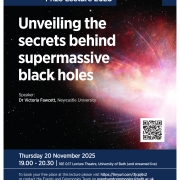
Thursday 20th November 2025 Unveiling the secrets behind supermassive black holes

The Caroline Herschel Prize Lecture 7 pm Thursday 20th November 2025 at 10E 0.17 Lecture Theatre, University of Bath and online

Dr Victoria Fawcett, University of Newcastle

Dr Victoria Fawcett, University of Newcastle

Dr Fawcett is a Research Associate at Newcastle University. She works on quasars and how they influence their host galaxies. She has demonstrated excellence in research, including a strong publication record, and co-leadership of the working group on active galactic nuclei within the Dark Energy Spectroscopic Instrument (DESI) collaboration. She is is an exceptional role model and promoter of increasing diversity in Astronomy and Physics. She also has an outstanding track record in outreach and communication, focussed on young people in the North East of England. She speaks with great clarity and enthusiasm in public talks, and her lecture topic should be of great interest.

A link to the recording of this lecture is available here.
Friday 5th December 2025 Thomas Harriot, Renaissance Astronomer, Navigator and Mathematician

Anthony Symes, Herschel Society

Friday 5th September 2025 7.30 pm in the BRLSI, Bath, and on Zoom

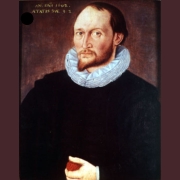
The image is a portrait, supposedly of Thomas Harriot, which is at Trinity College, Oxford.

Thomas Harriot was not only the first in England to be documented as pointing a telescope at the night sky and drawing the Moon (just before Galileo in Venice) but was also a navigator who had sailed to North America to set up the first English colony at Roanoke Island, had learnt the Carolina Algonquian language and had written a book about what he found: A Briefe and True Report of the New Found Land of Virginia. Later he went on to make a study of sunspots, and he left numerous manuscripts which paved the way forward to Newton in Mathematics and Optics.

When a portion of court intrigue and Harriot’s connections with other key Elizabethan and Jacobean figures is added in, the result is a story which needs to be told.

Tony Symes is keen, as an enthusiastic amateur, to talk about this all too often forgotten scientist and reveal the background against which he was operating.

This is our second contribution to the 2025-26 BRLSI Renaissance theme.

Anthony Symes CEng is a committee member of the Herschel Society and chairs the Programme Subcommittee at the BRLSI. He graduated in Physics at the University of Sussex and worked in IT, mainly on supervisory control systems.

A video recording of this lecture will be available shortly.